Buyers new to stainless steel are often confused by the many names used for coils and sheets. In practice, stainless steel flat products are classified in three ways: by production process, by grade family, and by surface finish.
By process - cold rolled vs hot rolled:
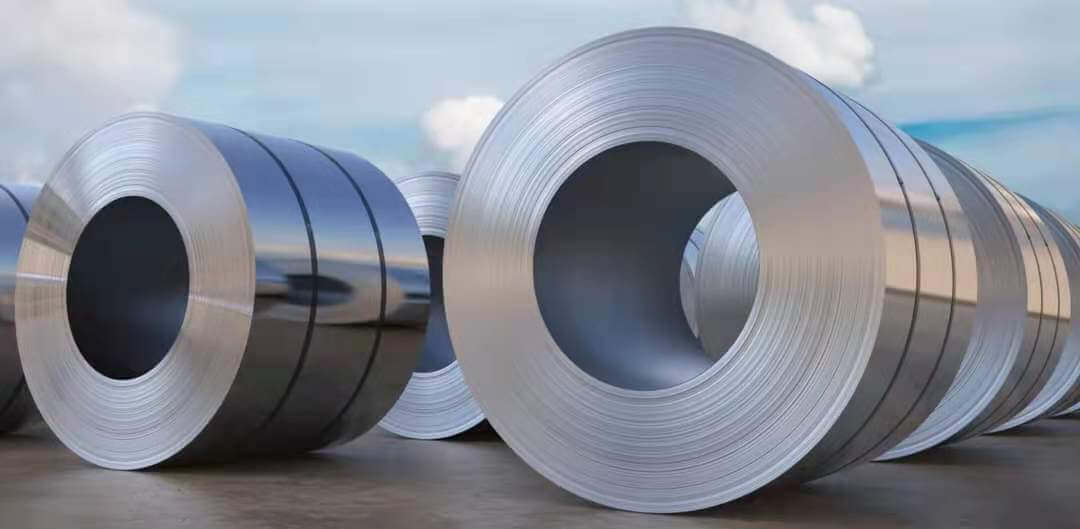
Cold rolled stainless steel coils are rolled to final thickness at room temperature after pickling, then annealed. They offer tighter thickness tolerance and smoother surfaces, typically from 0.17 mm to 3.0 mm for narrow coils and 0.3 mm to 8.0 mm for sheets. Hot rolled stainless steel coils are produced above the recrystallization temperature, usually 3.0 mm and thicker, and are chosen for structural and industrial applications where surface cosmetics matter less.
By grade family:
Austenitic grades such as 201, 304 and 304L account for the largest share of trade. 201 and its J-series derivatives (J1, J2, J3) offer an economical alternative where nickel cost is a concern, while 304/304L deliver higher corrosion resistance. 316L adds molybdenum for chloride environments. Precipitation hardening grades such as 17-4 PH provide very high strength after heat treatment, and ferritic grades 409, 410S and 430 serve automotive and appliance applications.
By surface finish:
2B is the standard smooth, moderately reflective cold rolled finish. BA (bright annealed) is mirror-bright. No.1 is the rougher hot rolled, annealed and pickled finish. No.4 provides a directional polish, HL (hairline) a fine continuous grind, and 8K a mirror polish. Color sheets add PVD titanium coatings in gold, rose gold, black, blue and grey on top of these base finishes.
Typical cold rolled specifications we supply:
Grades: 201, 304, 304L, 316L, J1/J2/J3, 17-4 PH - Thickness: 0.17-3.0 mm (coil), 0.3-8.0 mm (sheet) - Width: 1000, 1219 and 1500 mm, slit widths on request - Coil weight: 3-10 MT - Standards: ASTM, JIS, EN, GB/T - Coils normally shipped with mill test certificate.
Understanding these three dimensions - process, grade and finish - makes it much easier to compare quotations and to specify exactly what your production line needs.